Blog
Fiber Connectivity for GIDC Industries in Gujarat
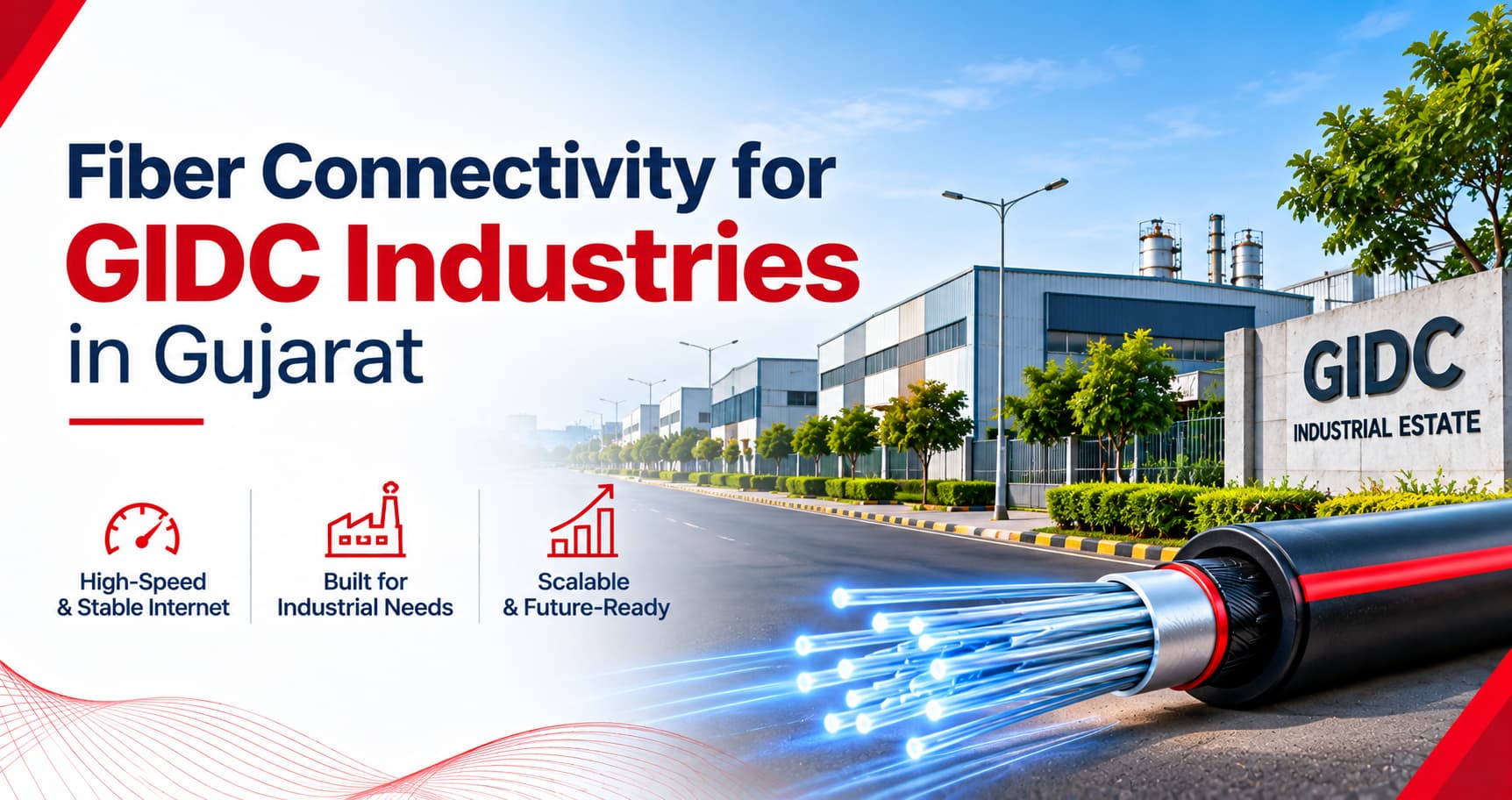
Gujarat’s GIDC estates are home to thousands of manufacturers, from chemicals and textiles to engineering and pharmaceuticals. As these units adopt automation, CCTV, ERP systems and cloud software, their need for fast and dependable connectivity keeps rising. Fiber connectivity is quickly becoming as essential to an industrial unit as power and water.
RK Fibergrid has built underground fiber across South Gujarat’s industrial belt, including Surat, Ankleshwar, Jhagadia GIDC, Vapi and Silvassa, and is the sole underground fiber network provider in Sachin SEZ. Here is what fiber can do for an industrial site, and what to look for when choosing a provider.
Why Industrial Units Need Fiber
Copper and wireless links struggle in industrial settings. Heavy machinery creates electrical interference, large sheds and metal structures block signals, and production cannot stop because a link dropped. Fiber carries data as light, so it is immune to electrical interference and can carry very high bandwidth over long distances.
Common uses inside a GIDC unit include:
- Plant networks (LAN) connecting machines, control rooms, offices and warehouses.
- Links between multiple plants or a plant and head office (WAN).
- High-definition CCTV with central monitoring across the whole campus.
- Machine automation and real-time data for predictive maintenance.
- Integrated fire safety, alarm and access control systems.
- Reliable access to ERP, cloud services and video conferencing.
Building a Fiber Network Inside an Industrial Campus
A well-planned campus network starts with a fiber backbone linking the main buildings, with branches to each production hall, utility area and gate. This setup, often called FTTx (fiber to the building, floor or device), gives every part of the site a high-speed, low-interference connection.
RK Fibergrid designs and builds these networks as a single project: survey, route design, laying, splicing, network equipment, CCTV and testing. One team handles the whole job, so the plant does not have to coordinate several contractors.
Connecting the Campus to the Outside World
Inside the fence, a campus network keeps operations running. Outside it, the site needs a reliable link to head office, other plants, data centres and the internet. Here, the route the fiber takes matters.
Underground fiber is far less likely to be cut by road works, heavy vehicles or weather than overhead cable on poles. For units that run around the clock, that difference shows up directly in fewer stoppages.
Security and Compliance
Many industries handle sensitive designs, formulas and customer data. A dedicated fiber link keeps that traffic on a private path instead of routing it across a shared public network. Combined with CCTV and access control on the same backbone, it also supports safety and compliance audits.
What to Look for in a Fiber Provider
- An existing underground network near your estate, to keep installation fast and affordable.
- In-house teams and machinery rather than subcontracted crews.
- Experience with industrial campuses, not only homes and offices.
- Clear repair commitments and local field support.
- A single point of contact for design, build and maintenance.
Fiber as Long-Term Infrastructure
Machines and software change every few years, but a well-laid fiber network can serve a plant for decades. Upgrading speed usually means changing the equipment at each end, not relaying the cable. For GIDC units planning to grow, investing in fiber now is one of the simplest ways to make the site ready for the next wave of automation.
With more than three decades of experience in Gujarat, starting as a Surat cable TV operator in 1992 and moving to optical fiber in 2000, RK Fibergrid continues to connect industrial estates across the state with underground fiber built to last.