
Blog
Underground Fiber Optic Cable Laying: Trenching vs HDD
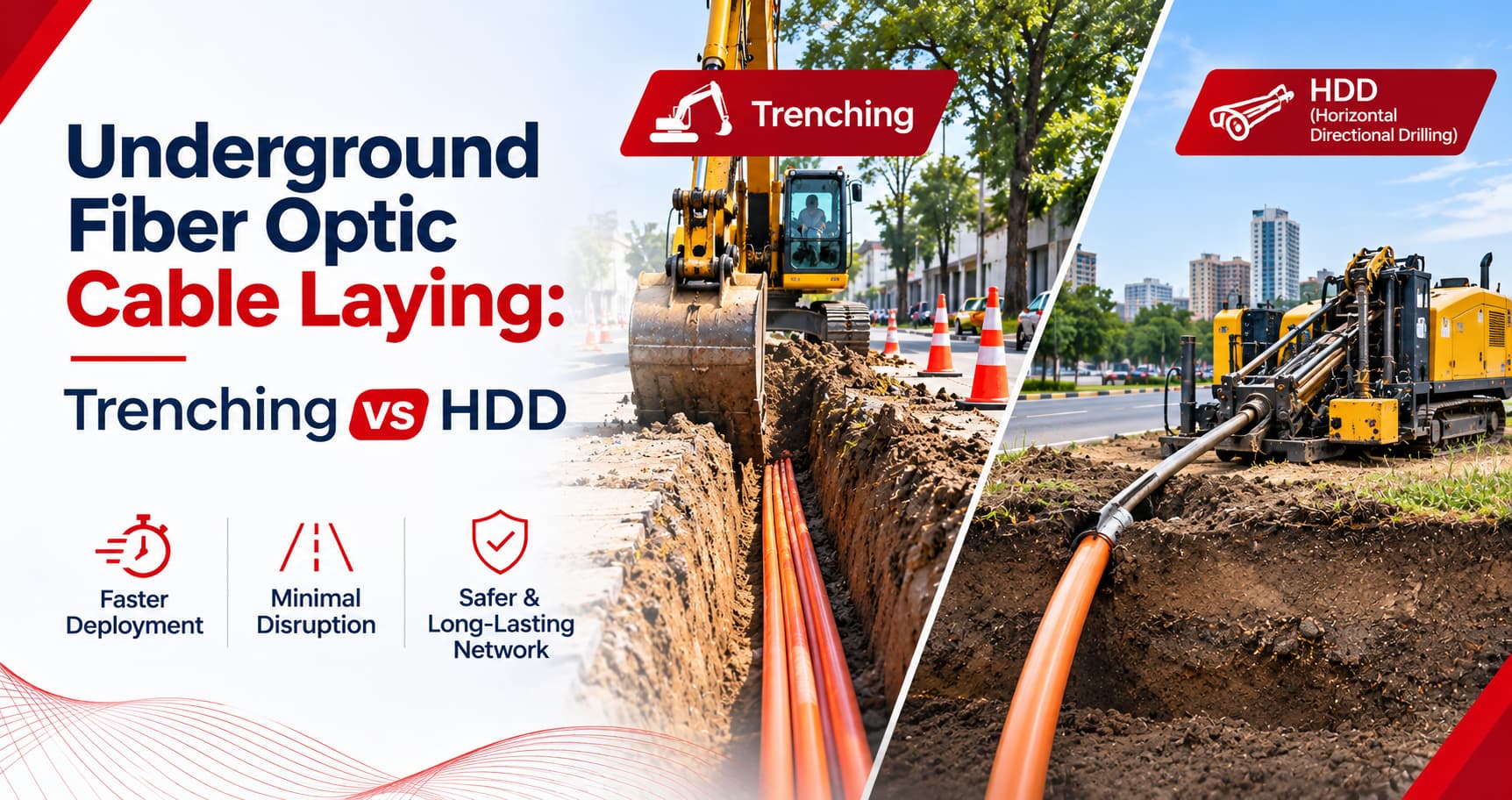
Laying fiber optic cable underground is the most reliable way to build a network that lasts. But how the cable goes into the ground matters as much as the cable itself. The two main methods are open trenching and Horizontal Directional Drilling (HDD), and each suits different conditions.
RK Fibergrid has been laying underground fiber since its early projects in the 2000s, including the Tata VSNL underground fiber project in Gurgaon in 2002 and Surat’s city-wide underground network from 2008. This guide explains both methods in plain terms.
Why Lay Fiber Underground at All?
Overhead fiber is quicker and cheaper to install, but it hangs in the open. Storms, fallen trees, vehicle strikes and work by other utilities can all cut it. Underground fiber sits inside protective ducts below the surface, so it is shielded from most of these risks.
For telecom operators, enterprises and city projects that need steady uptime, the higher upfront cost of going underground is usually repaid through fewer outages and lower repair costs over the life of the network.
Method 1: Open Trenching
Open trenching is the traditional approach. A narrow trench is dug along the planned route, ducts are placed at the required depth, the trench is backfilled and the surface is restored. The fiber is then blown or pulled through the ducts.
Open trenching works well when:
- The route runs along open land, road shoulders or unpaved areas.
- Several ducts need to be laid together for future capacity.
- There are few roads, rail lines or water bodies to cross.
Its drawbacks are surface disruption, longer road closures in busy areas, and the cost of restoring roads and footpaths afterwards.
Method 2: Horizontal Directional Drilling (HDD)
HDD is a trenchless method. A drilling rig bores a pilot hole along a planned underground path, widens it, and then pulls the duct through from one end to the other. Only small entry and exit pits are dug.
HDD is the better choice when:
- The route crosses busy roads, highways, rail lines, canals or drains.
- Surface digging is not allowed or would cause heavy traffic disruption.
- The route runs beneath bridges, underpasses or built-up city areas.
RK Fibergrid used HDD extensively for the Surat Safe City project, running fiber from camera poles to the command centre beneath roads and junctions. That network was completed in just four months.
Trenching vs HDD at a Glance
- Surface disruption: high with trenching, low with HDD.
- Best terrain: open ground for trenching; roads, crossings and city centres for HDD.
- Speed in built-up areas: slower with trenching, faster with HDD.
- Equipment: basic excavation for trenching; specialised drilling rigs for HDD.
Most real projects use both. Trenching covers the long open stretches, while HDD handles the crossings and dense urban sections.
What Happens After the Duct Is Laid
Laying the duct is only part of the job. The fiber is then installed, spliced at joint closures, terminated at each end and tested strand by strand before handover. After that, the route needs regular patrolling and quick repair if anything goes wrong.
This is why it helps to work with a provider that handles the full cycle in-house. RK Fibergrid uses its own machinery and field teams for planning, laying, splicing, testing, and operation and maintenance, which keeps quality consistent and response times short.
Permissions and Right of Way
Underground work on public land needs right of way permission from the relevant authority. Under the Telecommunications Act, 2023 and the Right of Way Rules that followed, applications and network records are increasingly handled through a central portal. An experienced contractor will manage these permissions as part of the project plan.
Choosing the Right Approach
There is no single best method for every route. The right mix depends on terrain, crossings, traffic and timelines. A proper route survey at the start will show where trenching is efficient and where HDD is essential, and will help you avoid costly surprises during construction.